Renowned German inorganic chemist known for his work on fluorine compounds
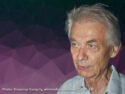
90th Birthday: Herbert W. Roesky
Guess the Chemist (165)
Can you guess the famous scientist from the description?
How Can Mass Spectrometry Detect Proteins?
Test your knowledge of MS, MALDI-TOF MS, and lncRNAs! What information can mass spectrometry reveal?
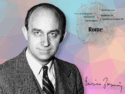
In Fermi’s Footsteps: The Roman Homes of a Scientific Pioneer
A journey through Enrico Fermi’s life, told through the houses he lived in

5th European Conference on Plant and Process Safety
The program fosters process safety culture by combining practical learning with networking between industry specialists and solution providers
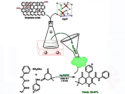
Silver–Graphene Catalyst Drives Greener Quinoline Production
A silver oxide–graphene oxide catalyst enables fast, eco-friendly synthesis of quinoline analogues with up to 97% yield in 20 minutes
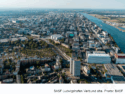
BASF Invests in Europe’s Semiconductor Future
With a new state-of-the-art Electronic Grade Ammonium Hydroxide (NH₄OH EG) plant in Ludwigshafen, BASF will supply ultra-pure NH₄OH crucial for advanced node chip technologies
Advanced Summit 2025
Brings together the global research community to accelerate breakthroughs in energy, electronics, and photonics
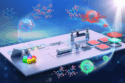
Highly Photoluminescent RGB Carbon Dots for Lighting–Energy Applications
By precise molar ratio control strategy, tricolor carbon dots with high quantum yields are prepared for integrated lighting–energy applications
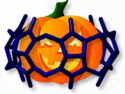
Pumpkin Molecules 🎃
From molecules that give pumpkins their flavor and color to pumpkin-shaped molecules